Dal Lake: Srinagar's Jewel in the Crown
Dal Lake is the beating heart of Srinagar and, for many travelers, the single defining image of Kashmir itself: wooden Shikara boats gliding across still water, houseboats with hand-carved walnut interiors moored along the shore, and the Zabarwan mountain range rising behind it all. Often called the "Jewel in the Crown of Kashmir," the lake has drawn emperors, poets, and travelers for over four centuries, and remains the reason most visitors come to Srinagar in the first place.
This guide covers everything about Dal Lake — its history and geography, the floating gardens and market, the houseboat tradition, ecology, and practical advice on when to visit and what to do. If you're planning a stay, our houseboats in Kashmir guide and Athena Houseboat pages cover accommodation in detail.
Quick Answer
Dal Lake is an 18 sq km urban lake in Srinagar, Kashmir, famous for its heritage houseboats, floating vegetable gardens, pre-dawn floating market, and Shikara boat rides. It was shaped by Mughal-era garden building in the 1600s and remains navigable only by Shikara. Best visited April-October (with a magical, quieter winter season December-February), and best experienced by staying overnight on a houseboat rather than just visiting for the day.
Dal Lake at sunrise, Boulevard Road, Srinagar
History of Dal Lake
Dal Lake's transformation into Kashmir's most celebrated landmark began in earnest during the Mughal era, when Emperor Jahangir and his successors built formal terraced gardens along its shores — Shalimar Bagh, Nishat Bagh, and later Chashme Shahi — as retreats from the summer heat of the plains. Kashmir's beauty during this period inspired some of the most famous Persian verses in Mughal court poetry, cementing the valley's reputation as an earthly paradise, with Dal Lake at its center.
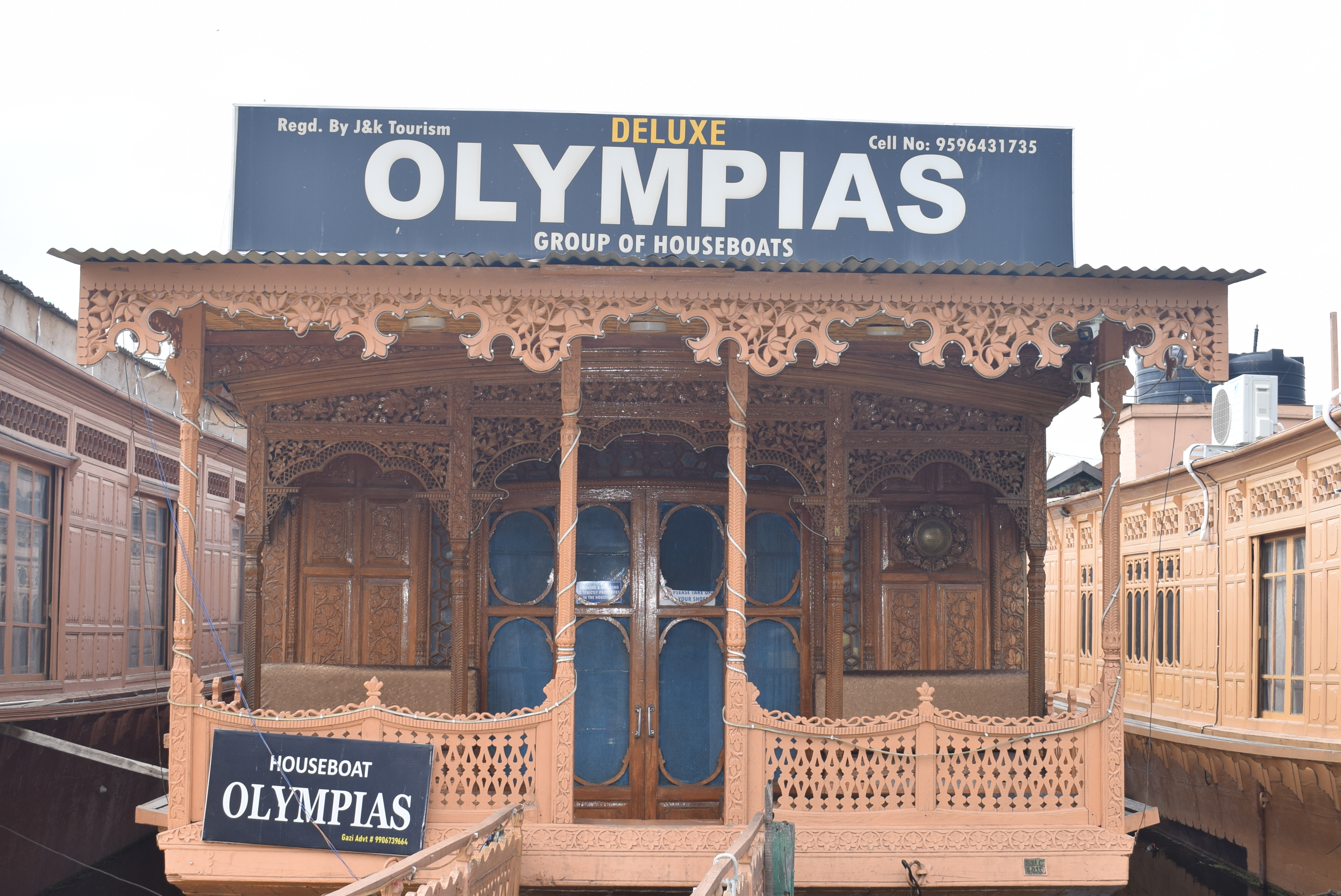
The houseboat tradition that now defines the lake has a more particular colonial-era origin. Under British rule, non-Kashmiris were legally barred from owning land in the valley, so British officials and visitors who wanted a base in Kashmir built elaborate wooden boats instead — anchored permanently on Dal Lake, styled after English country cottages but built by Kashmiri craftsmen. Over the following century, this practical workaround evolved into an art form: hand-carved walnut interiors, papier-mâché ceilings, and detailed joinery that today represents one of Kashmir's most distinctive crafts. Some houseboats operating on the lake today rest on hulls built in the 1940s and 1950s.
Through the 20th century, Dal Lake became inseparable from Kashmir's identity in global popular culture — a backdrop for Bollywood films, international travel writing, and diplomatic visits — while also facing growing pressure from Srinagar's expanding population and informal settlements along its shores, a tension that continues to shape conservation policy today.
Geography & Key Facts
Dal Lake sits at an elevation of approximately 1,583 meters (5,194 feet) within Srinagar city limits, bounded by the Zabarwan hill range to the east and the historic Hari Parbat fort to the west. It is fed primarily by mountain streams and the Telbal Nallah, with the Dal Gate regulating outflow into the Jhelum River.
| Fact | Detail |
|---|---|
| Current surface area | ~18 sq km (down from 22+ sq km historically) |
| Average depth | ~6 feet (1.8 m); max ~20 feet (6 m) |
| Elevation | ~1,583 m (5,194 ft) |
| Main basins | Gagribal, Lokut Dal, Bod Dal, Nagin (technically a separate connected lake) |
| Fed by | Telbal Nallah and mountain streams from the Zabarwan range |
| Outflow | Dal Gate, regulating flow toward the Jhelum River |
| Houseboats moored | Approximately 1,000-1,500 across the lake |
The Houseboats of Dal Lake
No single feature defines Dal Lake more than its houseboats. Built on deodar wood hulls that can last 60-100+ years with proper maintenance, the finest examples feature museum-quality hand-carved walnut wood interiors — wall panels, ceilings, and furniture carved with floral and geometric motifs by artisan families whose craft has been passed down for generations. Building a single premium houseboat can take 12-18 months and involve 20-40 skilled craftsmen. For the full construction story, see our detailed guide on how Dal Lake houseboats are made.
Houseboats range widely in quality, from basic budget properties to premium owner-operated boats. Location matters significantly: Boulevard Road, on the lake's southeastern shore, is generally considered the most prestigious address, offering calmer protected water, better infrastructure, and easier access to the city and sightseeing. Properties like Athena Houseboat at Ghat No. 13, Boulevard Road, represent this premium tier — hand-carved interiors, owner-operated hospitality, and inclusions like unlimited Shikara rides. For a full comparison framework, see our best houseboats in Srinagar Dal Lake guide.
💡 Did You Know?
Dal Lake houseboats were originally a workaround for a British colonial-era law that prohibited foreigners from owning land in Kashmir. What began as a practical loophole became one of Kashmir's most celebrated architectural traditions.
Floating Gardens & the Dawn Floating Market
Among Dal Lake's most distinctive features are its "Rad" — floating vegetable gardens built up over generations from layers of weeds, mud, and reeds anchored to the lake bed with willow stakes. Local growers cultivate tomatoes, cucumbers, melons, and lotus root on these floating plots, harvesting them directly by boat.
The produce from these gardens feeds Srinagar's famous floating vegetable market, held at dawn (roughly 5:30-7:30 AM) near the floating gardens in the Gagribal area. Dozens of small boats gather to trade fresh produce directly on the water — one of Kashmir's most authentic and photogenic experiences, best reached by an early-morning Shikara ride arranged the evening before through your houseboat host.
Shikara Rides: Exploring the Lake
A Shikara is a light, flat-bottomed wooden boat, traditionally paddled (not rowed) by a single boatman, often decorated with a canopy and cushioned seating. It is the only way to reach houseboats moored on the lake and remains the primary way to explore Dal Lake's inner waterways, floating gardens, and quieter backwaters.
- Sunset Shikara ride: The most popular route, timed for golden light over the Zabarwan mountains — typically 1-1.5 hours
- Dawn floating market ride: Departs before sunrise to catch the vegetable trading at its peak
- Floating gardens & Char Chinar route: A daytime cruise past the lake's floating farms and its famous four-Chinar-tree island
- Shopping Shikaras: Vendor boats selling saffron, jewelry, and handicrafts often approach houseboats and visiting Shikaras directly
At premium houseboats like Olympias Athena, Shikara rides are included unlimited as part of the stay rather than charged per trip — worth confirming directly with any property before booking, since this varies significantly.
Areas of Dal Lake
Boulevard Road (Gagribal basin): The lake's most prestigious address, lined with premium houseboats, hotels, and easy access to Srinagar's city center and Mughal gardens.
Nagin Lake: A quieter, technically separate but connected lake just north of Dal, known for calmer water and a more secluded atmosphere.
Char Chinar: A small island in the lake's Lokut Dal basin planted with four Chinar (plane) trees, best visited by Shikara for photographs and picnics.
Interior waterways: A maze of narrow inland channels where much of the local community lives, farms floating gardens, and moors traditional Doonga boats — best explored with a local boatman guide.
Attractions Around Dal Lake
Shalimar Bagh: The grandest of Srinagar's Mughal gardens, built by Emperor Jahangir in 1619, with terraced lawns, fountains, and Chinar-lined avenues.
Nishat Bagh: The "Garden of Bliss," a 12-terrace Mughal garden with sweeping lake and mountain views, built in 1633.
Chashme Shahi: A compact, elegant garden built around a natural spring, known for its cool climate and fine views over the lake.
Hazratbal Shrine: A revered mosque on the lake's northern shore housing a relic believed to be a hair of the Prophet Muhammad.
Hari Parbat Fort: An 18th-century hilltop fort overlooking the lake and city, with panoramic views for those willing to climb.
Beyond Dal Lake, most visitors combine their Srinagar stay with day trips to Kashmir's hill stations — see our guide to Sonamarg, the Meadow of Gold, roughly 87 km away.
Ecology & Conservation
Dal Lake faces genuine environmental pressure. Untreated sewage from surrounding settlements, nutrient runoff from floating gardens, and invasive weed growth have all contributed to the lake shrinking from over 22 sq km historically to roughly 18 sq km today, along with periodic algal blooms and reduced water clarity in parts of the lake.
In response, the Jammu & Kashmir government's Lakes and Waterways Development Authority (LAWDA) runs ongoing dredging, weed-removal, and sewage-treatment programs, alongside efforts to resettle informal lake-side communities and restore water flow. For visitors, this is worth knowing as context rather than as a deterrent — the areas frequented by houseboats, Shikara routes, and the floating gardens remain scenic, and the conservation programs are actively working to protect the lake's long-term health.
Best Time to Visit Dal Lake
| Season | Months | What to Expect |
|---|---|---|
| Spring | March-May | Blooming Mughal gardens, mild weather, moderate crowds |
| Summer | June-August | Warm, green, peak tourist season |
| Autumn | September-November | Golden Chinar foliage, clear skies, best value |
| Winter | December-February | Quiet, occasionally partially frozen, lowest prices, magical for photography |
Time of day matters as much as season: mornings (for the floating market) and evenings (for sunset Shikara rides) are when the lake is at its most atmospheric, regardless of which month you visit.
How to Reach Dal Lake
By Air: Srinagar Airport is approximately 14-16 km from Boulevard Road (Dal Lake), about 30-40 minutes by road, with regular flights from Delhi, Mumbai, and other major Indian cities.
By Rail: Srinagar Railway Station is approximately 12-14 km away, about 25-35 minutes by road.
By Road: Srinagar connects to Jammu via NH44 (approx. 270 km, 7-8 hours) and to Leh via the Srinagar-Leh Highway through Sonamarg and Zojila Pass.
Once in Srinagar: Dal Lake itself is reached by road to Boulevard Road or one of the surrounding ghats, and from there by Shikara to reach any houseboat moored on the water.
Experience Dal Lake From a Heritage Houseboat
The best way to understand Dal Lake is to stay on it, not just visit it. Olympias Athena offers hand-carved walnut rooms, unlimited Shikara rides, and authentic Wazwan cuisine at Boulevard Road, Ghat No. 13 — with direct owner hospitality from Saif ul Rehman Guroo.
WhatsApp: +91 9596431735 | Boulevard Road, Ghat 13, Dal Lake
Frequently Asked Questions About Dal Lake
How big is Dal Lake?
Dal Lake currently covers approximately 18 square kilometers, though historical surveys from the 1900s recorded it at over 22 square kilometers. It has shrunk over the past century due to encroachment, siltation, and weed growth, with ongoing conservation efforts aiming to restore its extent.
How deep is Dal Lake?
Its average depth is around 6 feet (1.8 meters), with the deepest sections reaching approximately 20 feet (6 meters) — a relatively shallow urban lake, which contributes to both its warmth in summer and its vulnerability to weed overgrowth.
Why is Dal Lake famous?
For its heritage houseboats with hand-carved walnut interiors, floating vegetable gardens and dawn market, Shikara boat rides, and the Mughal-era gardens (Nishat Bagh, Shalimar Bagh, Chashme Shahi) along its banks — often called the "Jewel in the Crown of Kashmir."
Can you stay overnight on Dal Lake?
Yes — staying on a traditional Kashmir houseboat moored on Dal Lake is one of the signature experiences of visiting Srinagar. Premium owner-operated houseboats like Athena Houseboat at Boulevard Road, Ghat No. 13, offer hand-carved rooms, meals, and unlimited Shikara rides.
What is the floating market on Dal Lake?
A pre-dawn gathering of local growers who sell fresh produce from small boats near the floating gardens, usually between 5:30-7:30 AM — one of the most photographed and authentic experiences on the lake, best reached by a sunrise Shikara ride.
Is Dal Lake polluted?
Dal Lake faces real ecological pressures including nutrient pollution, sewage runoff, and invasive weed growth, which have shrunk its open water area over recent decades. The Jammu & Kashmir government runs ongoing dredging and conservation programs, and most tourist zones near houseboats and the floating gardens remain scenic and well maintained.
What is the best time to visit Dal Lake?
Dal Lake can be visited year-round. April-June offers blooming gardens and pleasant weather; September-October brings golden Chinar foliage and clear skies; December-February offers a magical, sometimes partially-frozen lake at low season prices.
How do you get around Dal Lake?
By Shikara — a traditional flat-bottomed wooden boat paddled by a boatman — which is the only way to reach houseboats moored on the lake and to explore the floating gardens, markets, and inner waterways.
Continue exploring: read the complete houseboats in Kashmir guide, discover how Dal Lake houseboats are made, compare the best houseboats in Srinagar Dal Lake, or read the complete guide to Olympias Athena.